Exciting News!
Fish For Thought website is preparing for relaunch. You can still order your Seafood...
Fresh off the boat
 Read our FAQs
  01208 262202

Join our seafood revolution

Ethical & Sustainable
At Fish for Thought, we are on a mission to change the way people enjoy fish and shellfish forever. In order to achieve this, we recognise that we need to lead the way when it comes to sustainable and ethical sourcing.
This is one of our fundamental guiding principles, and we use it to challenge the status quo to help us make the right decisions.
Discover more
No catch guarantee
At Fish for Thought we pride ourselves on going the extra mile and doing our best every day, for all of our customers. I am proud of our hard working and dedicated team, all of who care passionately about what we do.
Discover more
We've been on the box
Over the years, we have been privileged to be involved in a number of TV programmes that you may have seen, involving some of our very own Food Hero’s. These include; The Hairy Bikers Food Tour of Britain, Young Fishmonger of The Year and Food Unwrapped.
Discover moreWhat we're all about ...
Making seafood recipes easy


Cornish Sardines with Chunky Homemade Tomato Sauce - Seafoodie Range
- Total Time: 15 mins
- Difficulty: Easy
- Serves: 2

Grilled Cornish Pollack, New Potatoes, Spinach & Parsley Sauce
- Total Time: 25 mins
- Difficulty: Easy
- Serves: 2

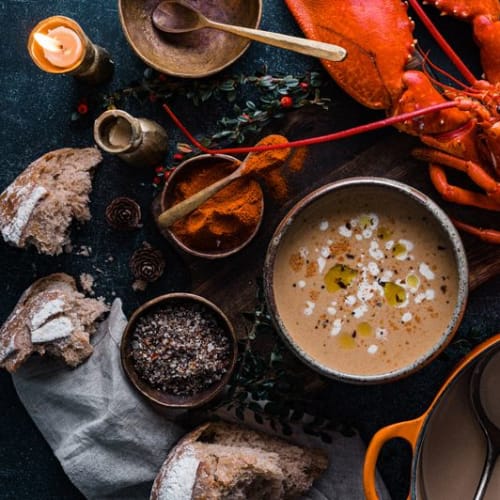
Chunky Diced Fish and Spiced Fish Broth - Seafoodie Range
- Total Time: 20 mins
- Difficulty: Easy
- Serves: 2

Customer reviews
Your fish is far better than any locally sourced
We have been ordering our fish from you for many years: firstly when we lived in Hampshire then when we moved to Scotland and then when we moved to Somerset. You have consistently supplied excellent fish that has been far better than any locally sourced.
Barbara, Bridgewater
The freshest we have had for absolutely ages
We had salmon, hake and haddock which arrived speedily at the time you promised. The container was excellent and although I was nervous of getting fish online, I have to say it is the best thing we have done. We love fish and it is probably the freshest we have had for absolutely ages and is a pleasure to eat.
Jane, Manchester
The fish was all super fresh!
Yes, the fish all arrived in perfect condition early on Friday morning. The smoked mackerel, salmon, halibut and wild sea bass were all delicious - bream and plaice now in the freezer - and I have received many compliments from my guests over the weekend. Like to think some of the compliments were for my cooking(!) but the fish was all top quality and super fresh. Have passed your details to one of my friends as well. Will definitely order from you in the future!
Jane, Radlett